How Long Do You Have to Wear Braces? A Timeline Guide
If you're wondering how long you have to wear braces, you're not alone. It's one of the first questions people ask before starting orthodontic treatment, and it's a fair one. Here at Midway Premier Dental, we believe that understanding the road ahead is part of feeling comfortable on the journey.
Below, we walk through typical timelines, the factors that shape them, and what you can do to keep your treatment on track. Every smile is different, so think of this guide as a helpful starting point rather than a promise.
Key takeaways
- Most patients wear braces roughly 12 to 36 months, with many falling around 18 to 24 months.
- Your personal timeline depends on your bite, your age, the type of appliance, and how complex your treatment plan is.
- Keeping appointments and following instructions are the biggest factors you can control.
- Retainer wear after braces is part of the full timeline and is typically long-term.
How Long Do You Have to Wear Braces? The Short Answer
Typical range for most patients
Most patients wear braces for roughly 12 to 36 months, and many land somewhere around 18 to 24 months. Some minor corrections may finish sooner, while more complex cases can take longer.
Think of this as a general range, not a guarantee. The average time in braces is a useful reference point, but it can't tell you what your own treatment will look like.
Why every smile has its own timeline
No two mouths are exactly alike. Your teeth, jaw, bite, and even your habits all play a part in how quickly your smile moves into place.
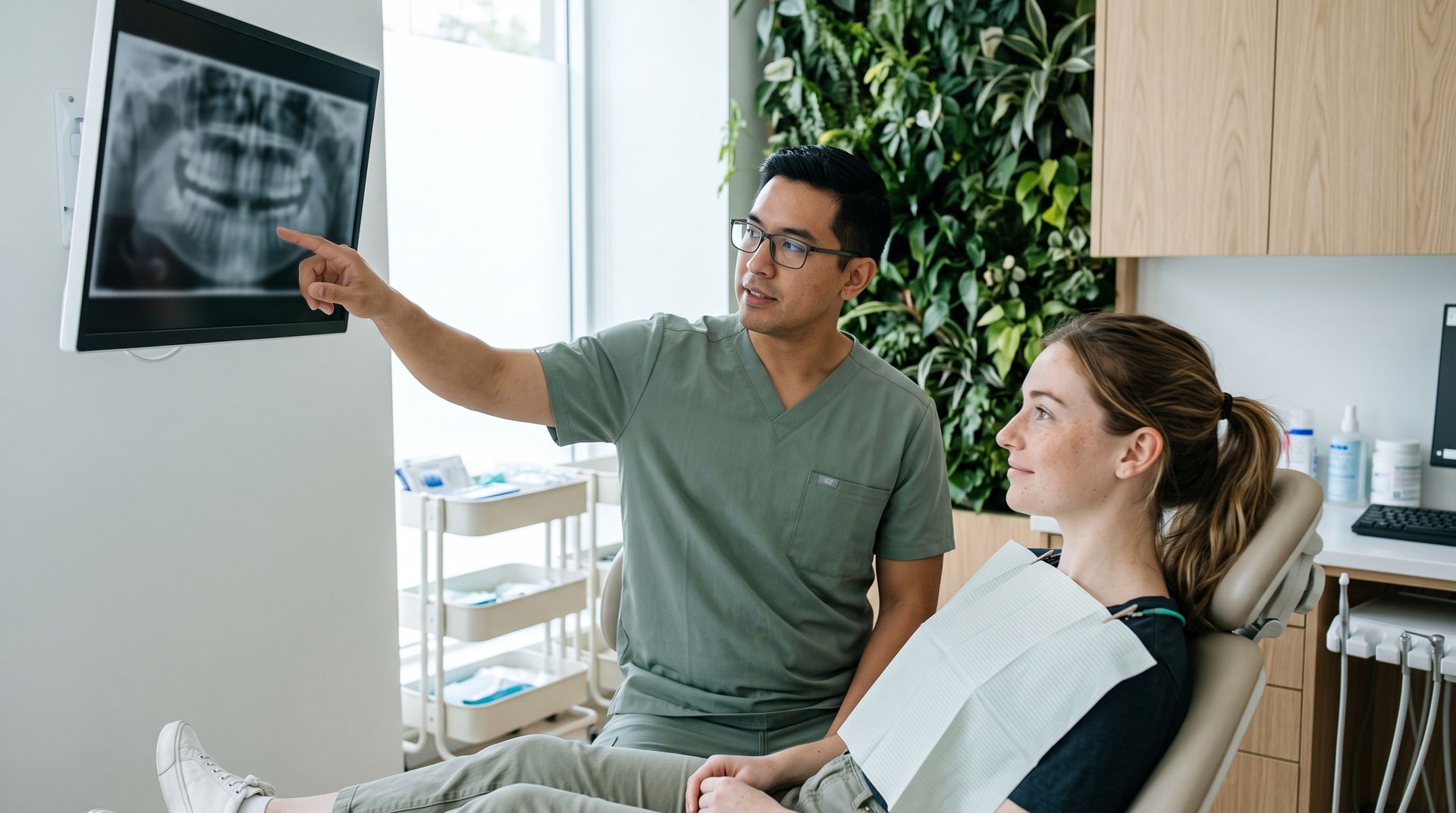
That's why only an exam can give you a personalized estimate. A professional evaluation lets your provider look at the full picture and talk with you about your goals in a relaxed, comfortable setting.
Typical Braces Timelines by Treatment Type
Different orthodontic options tend to come with different general timeframes. The table below offers a simple comparison, but your actual timeline may be shorter or longer.
| Treatment type | General timeframe | Best to know |
|---|---|---|
| Traditional metal braces | Often about 18 to 36 months | Suitable for a wide range of cases, including complex ones |
| Ceramic braces | Often similar to metal braces | Tooth-colored brackets are less noticeable |
| Clear aligners | Often about 12 to 24 months | Removable, but they only work when worn as directed |
| Limited or minor correction | Often several months to about a year | Focused on a small number of teeth |
Traditional metal braces
Metal braces are the classic choice and can address a broad range of alignment and bite concerns. Because they're fixed to your teeth, they work around the clock, which can be helpful for more involved cases.
Ceramic braces
Ceramic braces work in a similar way but use tooth-colored or clear brackets that blend in more with your smile. Treatment time is often comparable to metal braces, though your provider will advise based on your needs.
Clear aligners
Clear aligners are removable trays that gradually shift your teeth. They can be a good fit for certain cases, but results depend heavily on wearing them as many hours each day as instructed.
Limited or minor correction cases
If only a few teeth need adjusting, treatment may be shorter. These cases are often focused on small spacing or alignment concerns rather than the entire bite.
The right option is always decided together with an orthodontic provider. Midway Premier Dental offers orthodontics as part of its services, so you can explore your choices with a team that puts your comfort first.

Key Factors That Change How Long You Wear Braces
If you've ever asked why your friend's treatment took a different amount of time than yours might, these factors are usually the answer. Understanding them can help you set realistic expectations.
Severity of crowding, spacing, or bite issues
Teeth that need to travel farther generally need more time. Significant crowding, large gaps, or bite problems such as overbites and underbites often take longer to correct than mild alignment concerns.
Age and bone development
Teeth move through bone, and bone responds differently at different stages of life. In growing patients, jaw development can sometimes be guided as part of treatment, while adult bone is typically more settled.
Type of appliance
The appliance you choose can influence both the approach and the pace. Fixed braces, ceramic braces, and aligners each have strengths, and your provider can explain which is likely to suit your goals.
Treatment plan complexity
Some plans involve more than moving teeth side to side. Rotating teeth, closing larger spaces, or coordinating with other dental work can add steps and time, but they also help build a result that lasts.
Habits That Can Speed Up or Slow Down Your Treatment
Many people ask how to get braces off faster. While no habit can guarantee an earlier finish, the choices you make each day can help you avoid delays.
Keeping appointments on schedule
Regular adjustment visits allow your provider to monitor progress and make timely changes. Missed or rescheduled appointments can slow things down, so try to keep them on your calendar.
Booking your next visit before you leave the office is a simple way to stay on track.
Wearing elastics as directed
If your plan includes rubber bands, they're doing important work to adjust your bite. Wearing them as instructed, rather than occasionally, helps your teeth move as planned.
Avoiding foods that break brackets
Hard, sticky, or chewy foods can loosen or break brackets and bend wires. Each repair can interrupt progress, so it's worth steering clear of things like hard candy, popcorn kernels, and ice.
Oral hygiene during treatment
Braces create more places for plaque to hide, so brushing and flossing carefully matters even more. Healthy gums and teeth help treatment proceed smoothly and protect your smile for the long run.
Braces for Teens vs. Adults: Does Age Affect Duration?
People often wonder how long teens wear braces compared with adults, and whether starting later means a longer road. The honest answer is that it depends on the individual.
Teen treatment considerations
Teens are often still growing, which can make certain corrections more responsive. Treatment still varies widely, and success depends on cooperation with instructions, from wearing elastics to keeping up with brushing.
Adult treatment considerations
Adults can achieve excellent results with braces. Differences in bone density and existing dental work, such as crowns or fillings, may influence timing for braces treatment for adults, but they don't rule out a beautiful outcome.
Adults may also have gum health or past dental treatment to consider. That's why preventative and general dental care are so valuable throughout orthodontic treatment, helping keep your teeth and gums healthy while your smile changes.
Life After Braces: Retainers and Maintaining Your Results
Getting your braces off is a milestone, but it isn't quite the finish line. The retention phase is part of the full timeline.
Why retainers matter
After treatment, teeth have a natural tendency to drift back toward their old positions. A braces retainer after treatment holds your teeth steady while the surrounding bone and tissue adapt.
Wearing your retainer protects the investment you've made in your smile and helps preserve the cosmetic results you worked so hard to achieve.
How long to wear a retainer
Retainer wear is typically long-term. Many providers recommend full-time wear at first, then a gradual shift to nighttime wear, but the specifics vary from person to person.
Your provider will give you clear instructions based on your case. Following them closely is the best way to keep your smile looking its best for years to come.
Planning Your Braces Journey in Sanford, FL
If you're searching for orthodontics in Sanford, FL, the first step is simply a conversation. A consultation is a chance to ask questions and learn what your own timeline might look like.
What to expect at your first consultation
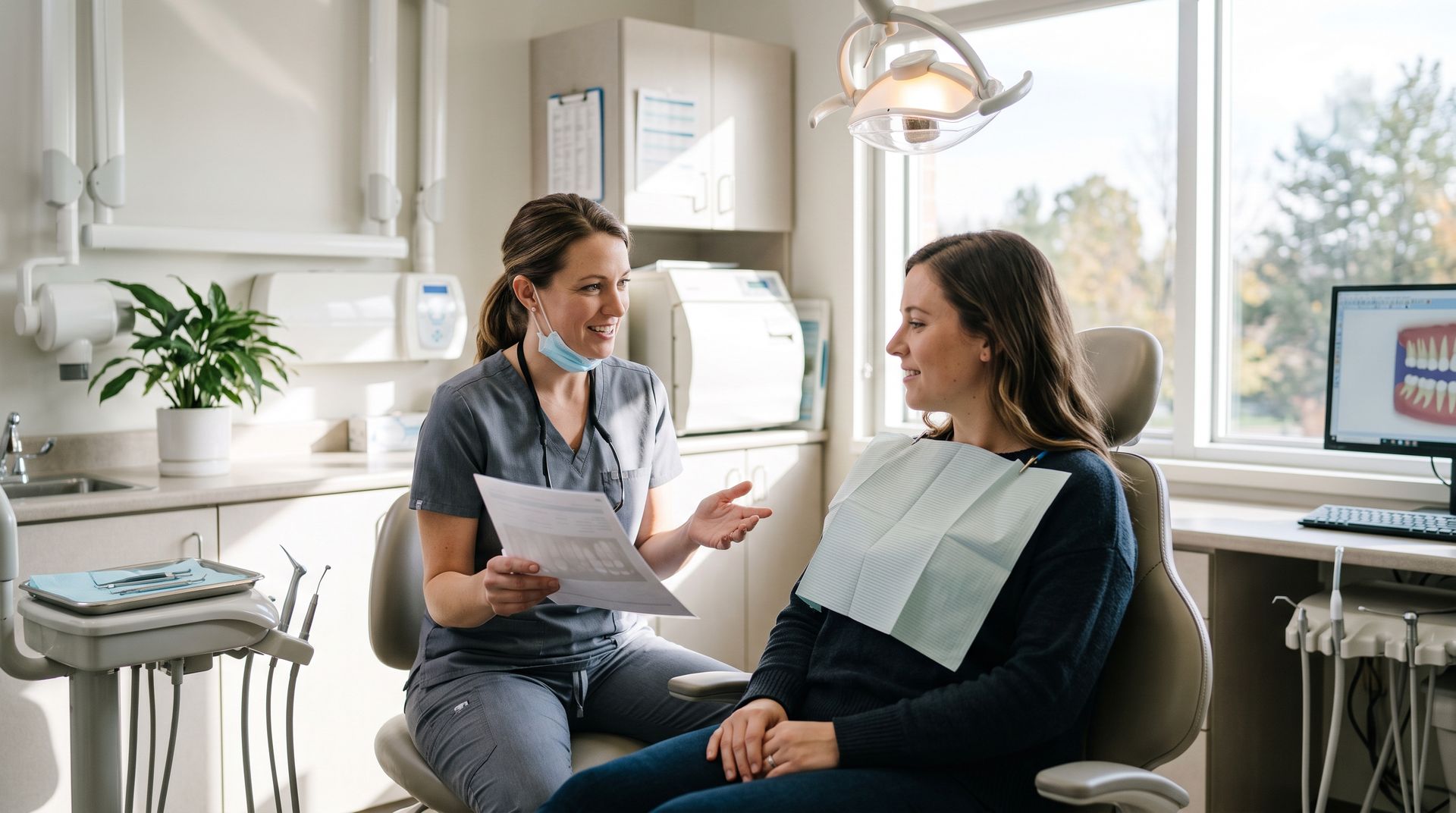
At an initial visit, your provider will examine your teeth and bite and talk with you about your goals. From there, you can discuss your options and receive a personalized timeline estimate.
It's a relaxed, no-pressure opportunity to get answers, and our team is focused on making you feel comfortable from the moment you walk in.
Why choose Midway Premier Dental
Midway Premier Dental is a one-of-one clinic, with proprietary machines and technology you won't find anywhere else. Combined with our commitment to premier care and comfort, it's an experience designed around you.
Along with orthodontics, we offer general dentistry, preventative care, cosmetic dentistry, implants, and oral surgery. You can learn more about our services at midwaypremierdental.com.
Frequently asked questions
How long do you have to wear braces on average?
Most patients wear braces for roughly 12 to 36 months, with many falling around 18 to 24 months. This is a general range, and your own timeline depends on your needs. An exam is the best way to get a personalized estimate.
Can you get braces off faster?
While there are no guarantees, you can help avoid delays by keeping appointments, wearing elastics as directed, and avoiding foods that damage brackets. Good oral hygiene also keeps treatment running smoothly. Your provider can tell you what's realistic for your case.
Do adults have to wear braces longer than teenagers?
Not necessarily. Adult treatment can sometimes take a bit longer because of bone density or existing dental work, but every case is different. Many adults achieve excellent results.
How long do you have to wear a retainer after braces?
Retainer wear is typically long-term. Your provider will give you specific instructions, which often start with more frequent wear and later shift to nights only. Following that guidance helps protect your results.
Do clear aligners take less time than traditional braces?
Sometimes, but not always. Clear aligners may suit certain cases well, while more complex corrections may be better served by fixed braces. Your provider can help you decide which option fits your goals.
Ready to take the first step toward a confident, lasting smile?
Book your appointment online or call 407-604-4884
and experience premier care and comfort at Midway Premier Dental.