At What Age Should Kids Get Braces? A Parent's Guide
If you are wondering at what age kids should get braces, the answer is less about a birthday and more about how your child's teeth and jaws are developing. At Midway Premier Dental, we believe every family deserves premier care and comfort from the very first visit. This guide explains when to schedule an evaluation, what to look for at home, and how to plan with confidence.
Key takeaways
- The American Association of Orthodontists recommends a first orthodontic check-up around age 7.
- An early evaluation does not mean braces will start right away; many children are simply monitored.
- Many children begin full braces between roughly ages 9 and 14, depending on development.
- Only a dental professional can diagnose whether your child needs treatment.
At What Age Should Kids Get Braces? The Short Answer
The American Association of Orthodontists recommends that children have a first orthodontic check-up around age 7. Many children then begin full braces between roughly ages 9 and 14, depending on how their teeth and jaws develop. Some start earlier, some later, and many need nothing more than regular monitoring for a time.
Why there is no single "right" age
Children grow at different paces. Baby teeth fall out earlier for some kids and later for others, and jaw growth follows its own timeline. That is why the best age for braces varies from child to child.
A child who loses baby teeth early may be ready for treatment sooner than a classmate of the same age. Treatment timing is best guided by development, not just the calendar.
The role of an early evaluation versus starting treatment
An early orthodontic evaluation is an information-gathering visit. It gives a dental professional a chance to look at your child's bite, spacing, and growth patterns.
Starting treatment is a separate decision. Many families leave an evaluation with a simple plan: check back in six months or a year. That peace of mind is valuable on its own.
Why Age 7 Is a Smart Time for a First Orthodontic Evaluation
By age 7, most children have their first permanent molars and incisors. These teeth are important landmarks, because they help a dental professional assess how the upper and lower teeth fit together.
What can be seen when baby and adult teeth are mixed
During this mixed-dentition stage, a dental professional can evaluate bite relationships, spacing, and the early direction of jaw growth. It is a window into how your child's smile is likely to develop.
Spotting patterns early allows for thoughtful planning rather than rushed decisions later.
Problems that are easier to address early
Certain issues are often easier to manage when they are noticed early. These include:
- Crossbites: upper teeth sit inside the lower teeth when biting.
- Severe crowding: not enough room for incoming permanent teeth.
- Overbites: upper front teeth extend well past the lower teeth.
- Underbites: lower teeth sit in front of the upper teeth.
- Open bites: front teeth do not meet when the mouth is closed.
Early monitoring can simplify later care, though every child is different and outcomes cannot be promised.

Signs Your Child May Need Braces or an Earlier Check-Up
You know your child best. If something looks or feels off, it is worth asking about. Here are common signs your child needs braces or a prompt evaluation.
Visible signs parents can spot at home
- Baby teeth that fall out very early or very late
- Difficulty chewing or biting
- Crowded, misplaced, or protruding teeth
- Jaws that shift, click, or pop
- Teeth that do not meet properly when the mouth is closed
- Biting the cheek or roof of the mouth often
Habits that can affect tooth and jaw development
- Thumb sucking or pacifier use beyond the typical age
- Mouth breathing, especially during sleep
- Prolonged bottle use or tongue thrusting
If you notice any of these, consider booking an evaluation. Keep in mind that only a dental professional can diagnose a bite or alignment concern.
Early (Phase 1) Treatment vs. Waiting for Full Braces
Parents often ask whether treatment should begin early or wait until the teen years. The honest answer is that it depends on the individual child.
What interceptive orthodontics aims to do
Interceptive orthodontics uses early appliances or strategies to guide jaw growth, create space for incoming teeth, or address a developing bite problem. The goal is to support healthy development so later treatment may be simpler.
When monitoring is the better choice
Many children do well with observation alone. If teeth are developing in a healthy pattern, the best plan may be to watch and wait, with periodic check-ins as new teeth come in.
What a later phase of treatment looks like
Once most permanent teeth have erupted, often in the preteen or early teen years, full braces can align teeth and refine the bite. Some children who had early treatment still need this phase, while others may not.
| Approach | Typical Timing | General Purpose |
|---|---|---|
| Early evaluation | Around age 7 | Assess bite, spacing, and jaw growth |
| Phase 1 (interceptive) treatment | Mixed dentition, when recommended | Guide growth or create space |
| Monitoring | Ongoing check-ups | Track development and choose the right time |
| Full braces | Roughly ages 9 to 14, varies | Align teeth and refine the bite |
What to Expect at Your Child's First Orthodontic Visit
A first visit should feel calm, friendly, and informative for both you and your child. Midway Premier Dental in Sanford, FL offers orthodontics as part of its services, so families can approach this step with a team focused on care and comfort.
The exam, X-rays, and conversation with the dentist
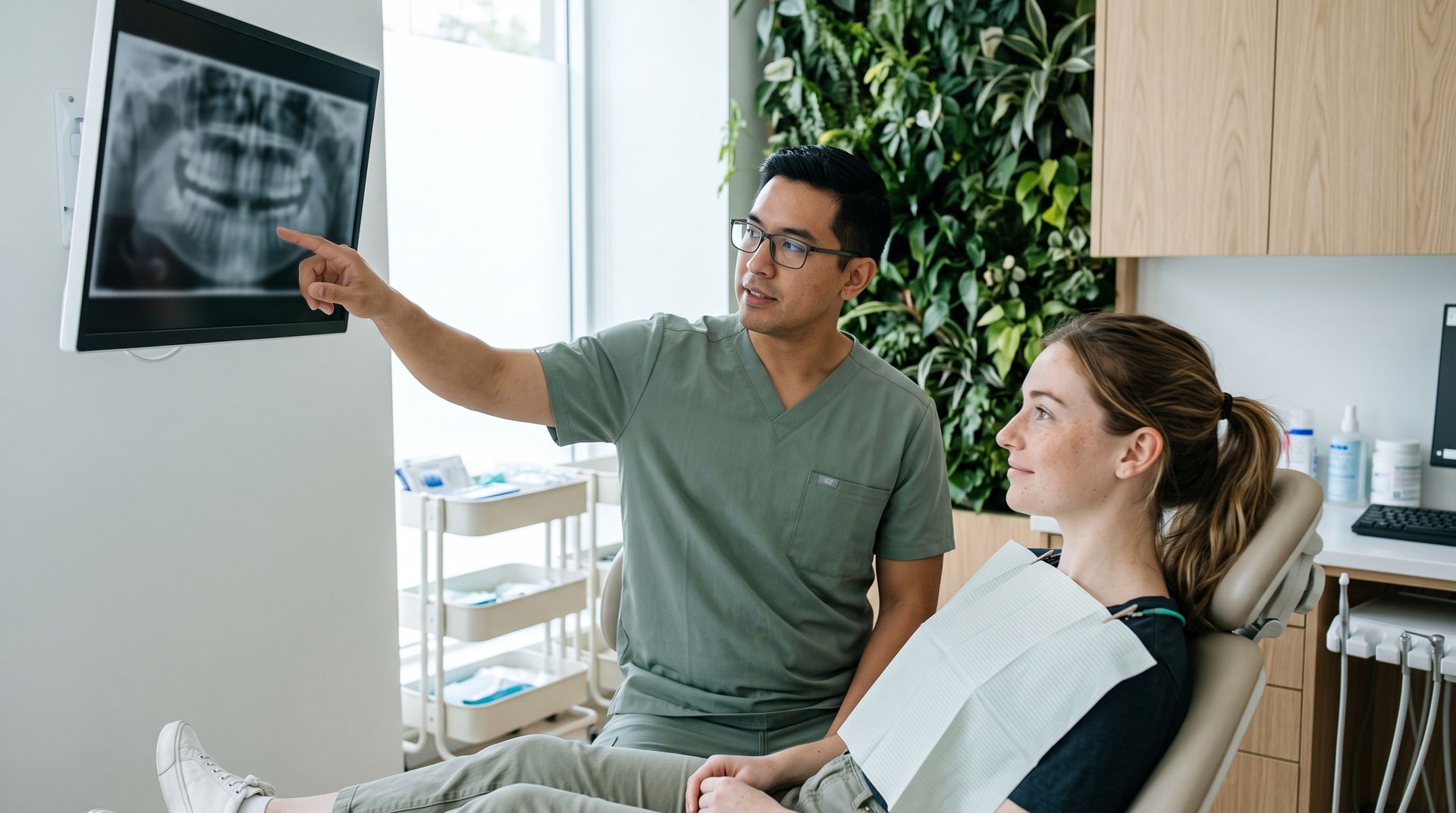
A typical kids braces consultation begins with a review of your child's dental and medical history. Next comes a visual exam of the teeth, bite, and jaw. Imaging may be recommended if more detail is needed.
Afterward, the dentist discusses what was found, whether treatment is needed, and what timing may make sense.
Making the visit comfortable for kids
Children relax when they know what is coming. Explain that the visit is mostly looking and talking. A gentle, unhurried approach helps kids feel safe, and it helps parents feel heard.
Questions parents should ask
- Does my child's bite or jaw growth show any concerns?
- Is early treatment recommended, or is monitoring enough?
- What are the options and timelines?
- How often should we return for check-ups?
- What can we do at home to support healthy development?
Why Choose Midway Premier Dental for Your Child's Orthodontic Care in Sanford
Families looking for an orthodontist in Sanford FL want expertise and a welcoming environment. Here is what sets our practice apart.
A one-of-one clinic with proprietary technology
Midway Premier Dental is a one-of-one clinic. We use proprietary machines and equipment that no other clinic has. It is part of our commitment to delivering a premier experience for every patient.
Comprehensive care under one roof
Your family can keep care in one place. Our services include:
- General dentistry
- Preventative care
- Orthodontics
- Cosmetic dentistry
- Implants
- Oral surgery
That continuity can make children's orthodontic treatment feel simpler, since everyone is working with a full picture of your child's oral health.
How to Prepare and Book Your Child's Evaluation
A little preparation helps you get the most out of the visit. For general guidance on orthodontic care, the American Association of Orthodontists is a helpful resource.
Simple steps for parents before the appointment
- Write down any concerns, such as chewing trouble or habits like thumb sucking.
- Gather your child's dental history and any previous X-rays.
- Note when baby teeth were lost, if you remember.
- Talk positively with your child about the visit, and let them know it is a friendly check-up.
Why booking sooner gives you more options
An early look gives your family time to plan. If treatment is needed, you will have more choices about timing and approach. If it is not, you will know what to watch for and when to return.
Either way, you gain clarity. Waiting can narrow your options, so scheduling sooner is a smart move.
Frequently asked questions
At what age should kids get braces?
The American Association of Orthodontists recommends a first check-up around age 7. Many children begin full braces between roughly ages 9 and 14, depending on development. The right timing is different for every child.
Is age 7 too early for an orthodontic evaluation?
No. By age 7, the first permanent molars and incisors have usually erupted, which allows a dental professional to assess the bite and jaw growth. It is an evaluation, not a commitment to treatment.
What are the signs my child needs braces?
Common signs include early or late loss of baby teeth, difficulty chewing, crowded or protruding teeth, mouth breathing, prolonged thumb sucking, and jaws that shift or click. Only a dental professional can diagnose the need for braces, so an evaluation is the best next step.
Does an early orthodontic evaluation mean my child will need braces right away?
Not at all. Many children are simply monitored over time, and treatment begins only when it makes sense. The visit gives you information and a plan.
Can a general dentist refer or evaluate my child for orthodontic needs?
Yes. A general dentist can often spot early signs during routine visits and discuss whether an orthodontic evaluation is a good idea. At Midway Premier Dental, general dentistry and orthodontics are both available in one place.
Ready to take the next step? Give your child the benefit of premier care and comfort.
Book your appointment online at
midwaypremierdental.com
or call 407-604-4884